Posts

Showing posts with the label Financial crisis

Volcker Rule: Point of No Return

Image
Volcker's rules: Any day now Three years have elapsed since regulators proposed new regulation to restrict proprietary trading at banks (more specifically, depositary financial institutions).   Three years of discussion, debate, rule-writing and re-writing, dissension, lobbying, and procrastination.  And now the new rule, better known as the Volcker Rule and named for former Federal Reserve chairman Paul Volcker, who first proposed limits on bank trading during the crisis, has reached a point of no return.   Regulators--the SEC, FDIC, OCC, CFTC and the Federal Reserve--have promised to sign off before mid-December. Banks aren't surprised. They aren't caught off guard. They knew an old era of gun-slinging, wild, volatile, frantic, but overwhelmingly profitable proprietary trading at the major banks was coming to an end.   While regulators and their lawyers sequestered themselves for years to write hundreds and hundreds of pages of rules, banks tried to push back and ...
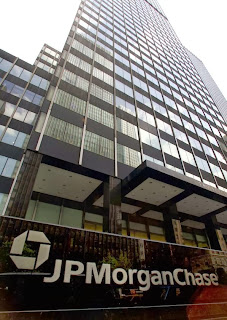
At JPMorgan Chase, Is $13 Billion a Lot of Money?

Image
The $13 billion: It can handle it. A question has lingered for much of the past week, one that hasn't been asked often out loud or asked pointedly. Is $13 billion a lot of money for JPMorgan Chase?  Will it crush the bank's growth plans and business opportunities in the periods to come? Will it strangle a banking empire and cause it to retreat into a shadow of its post-crisis self? Announced in business headlines everywhere, the $13 billion is the total amount in the bank's settlement with the U.S. Department of Justice, all related to the bank's mortgage-securitization business in the 2000's and the businesses it inherited from its acquisitions of Bear Stearns and Washington Mutual.  The government claims JPMorgan and affiliates improperly and unfairly structured mortgage securities, leading to billions in losses to investors who had purchased the securities. The settlement puts an end to one chapter in the bank's efforts escape the mortgage nightmare of that ...

Basel III: Becoming Real

For those who work in or work with financial institutions, it's nearly impossible to avoid discussions of financial regulation.  It's everywhere.  It can be the drudgery of banking, deal-making, trading, lending, and investing.  But in an environment that is hustling to rid itself of the stark memory of the financial crisis, it's inescapable.  Financial regulation, Dodd-Frank and Basel III are hot summer topics this year, because it's time for the deliberation to stop and for the rules to become real.  Large banks, such as Bank of America, Goldman Sachs, and Citigroup, have sprinted tirelessly to get ahead of the 900-plus pages of Basel III regulation-- rules drafted by the Basel Committee on Bank Supervision, which includes 27 nations, and intended to have more meat than the rather languid rules of Basel II and Basel 2.5. Basel III regulation consumes the minds of CEOs and global heads of legal, risk, and compliance.  Trying to gain a fierce ...

What Happened at JCPenney?

Image
Waiting for the invitable b-school case Eventually this will become an intriguing business-school case, particularly for those concentrating in marketing and general management.  Activist investors push hard to re-engineer, restructure and revitalize JCPenney, the old retailing outfit--languishing in modern times, struggling to expand, and suffering with losses and a tanking stock price in the post-recession recovery. The old CEO resigns, and the company figures it has found the solution in a dynamic new CEO, who would swoop in and radically change JCP by casting upon it magical dust from Steve Jobs and Apple.  JCP, amidst fanfare, hires Ronald Johnson after he helped spawn and lead Apple's broadly successful and wildly popular store expansion.  Apple, Jobs and Johnson had transformed the branch-store and electronic-purchasing experience into in-store theater. JCP succumbs to the nudges from shareholder activist and prominent investor William Ackman. They reason that John...

Dark Days at Knight Capital

Despite all efforts to corral Wall Street to avert a crisis, avoid market collapse, and instill confidence in the system, guess what happens. Yet another major misstep in the marketplace by one of its big participants.  And not just the rare market mistake that occurs once every year or two.  Missteps, hiccups, and strange collapses seem to be occurring these days just about every other week. This week, it's Knight Capital , the equities market-making firm that announced losses of over $400 million after it launched new software in its trading systems.  Software errors and technology glitches led the firm's black boxes to spew large orders of errant trades. By the time the firm's humans (not machines) could discover what was happening, it was too late. The losses had piled up on trades the firm had no idea it had booked and would have never wanted to make in the first place.  The losses wiped out about half of its book-value equity, and now it struggles to survive in...

For the Fortunate Few: Comp Packages

Bonus season at financial institutions has come and gone. Yet for the month or two afterwards, there is the inevitable aftermath, the ruminating over what happened and the pondering over whether lucrative payouts in years past will ever reappear. In the post-crisis financial industry, where many just feel fortunate to be employed, there will still be some degree of anger, frustration, or disappointment in payouts. Many yearn for the times of the 1990s or the early 2000s.  Most know the industry is still enduring a shake-out or a re-engineering of sorts, and compensation is a candidate for shake-out, too.  Handsome compensation packages still exist in certain segments, perhaps most prominently at venture-capital firms, private-equity companies and hedge funds.  Even in 2012, you can read about insane, mind-boggling bonuses, likely because someone made an insane, mind-boggling hedge-fund trade.  Payouts at banks, investment managers and other financial institutions (or...

MF Global: Too Small to Save

Image
Not the same impact as Lehman Late last month the world of finance, brokerage and trading experienced a hiccup--beyond the daily eruptions from Europe.  It wasn't yet another day of market swoons or showdowns in Europe.  It wasn't yet another day of a nose-dive in the Dow or headline disagreements on how the economy should recover. MF Global , the futures brokerage firm, filed for bankruptcy.  It was deemed too small to save. MF Global was not a household name (but so wasn't Bernard Madoff before the world found out about that fraud). Few outside the industry knew much about MF Global. Some knew that former New Jersey Governor Jon Corzine was its CEO. And they knew Corzine had been the head at Goldman Sachs in the 1990s. MF Global was known as a major player in futures and commodities brokerage. It had institutional client accounts with hedge funds, pension funds, corporations, banks, other brokerages, and other trading firms. It facilitated futures and commodities tradi...